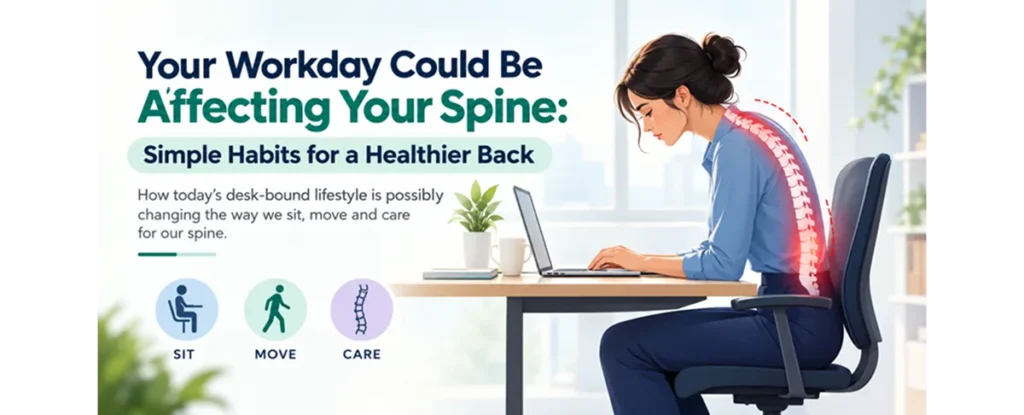
Your Workday Could Be Affecting Your Spine: Simple Habits for a Healthier Back
How today’s desk-bound lifestyle is possibly changing the way we sit, move and care for our spine

BY: Dr Varun Kataria
Senior Consultant
Neurosciences, Medanta Hospital, Indore
Long periods in one position can contribute to neck and back discomfort. However, pain does not automatically mean that the spine is damaged. Rather than trying to hold one perfect posture all day, aim for a comfortable workstation, regular changes of position and an active lifestyle.
The modern workplace has made many things easier—but it has also made us far less active. Hours spent in front of laptops, frequent video meetings, long commutes, constant phone use and very little movement have become part of everyday corporate life. While these habits may seem harmless, repeating them day after day can gradually put stress on the spine and surrounding muscles.
The spine is designed to support movement, balance and posture while protecting the spinal cord and important nerves. When we remain in poor positions for prolonged periods, the muscles and joints around the spine may become strained, potentially leading to neck stiffness, back discomfort, headaches or pain that interferes with daily activities.
How the Corporate Lifestyle Can Affect Your Spine
1. Long hours at the laptop
Working continuously at a desk often encourages people to lean forward, round their shoulders or move closer to the screen. Over time, this can increase strain on the neck and upper back.
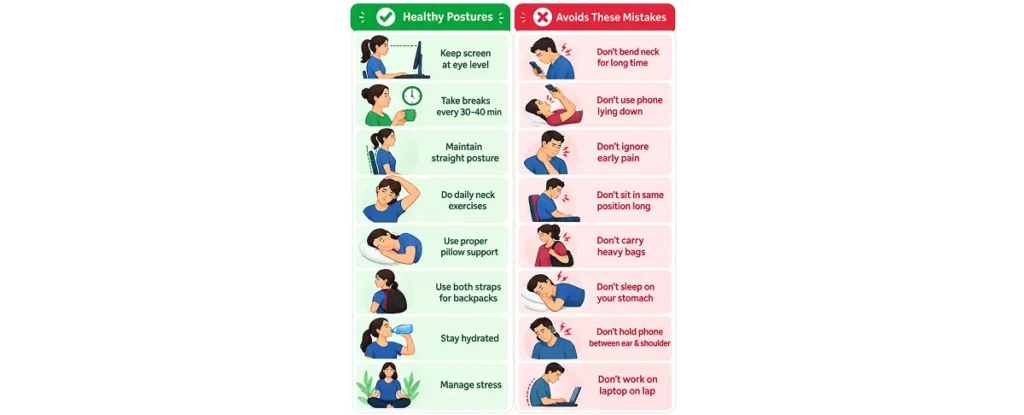
Better habit: Keep the screen approximately at eye level, sit with your back supported and avoid leaning forward for long periods.
2. “Tech neck” from constant phone use
Checking messages, scrolling through social media and attending calls on a smartphone often means keeping the head tilted downward or sustained uncomfortable positions.
Better habit: Raise the phone closer to eye level and give your neck regular breaks from prolonged screen use.
3. Sitting for hours without moving
Even a reasonably good sitting position can become problematic when maintained for several hours. Muscles can become stiff and fatigued when the body remains in one position for too long.
Better habit: Get up regularly, walk for a few minutes and change your position throughout the workday.
4. Poor workstation setup
A chair that does not provide adequate support, an incorrectly positioned monitor or a keyboard placed too far away can encourage awkward body positions.
Better habit: Adjust your chair, desk and monitor so your back, neck, arms and legs remain comfortable while working. Keep the top of the screen at or slightly below eye level, directly in front of you, at a comfortable viewing distance. The screen’s centre should normally be below eye level.
5. Long commutes and prolonged travel
Corporate professionals may spend additional hours sitting in cars, buses, trains or flights after an already sedentary workday. This can further reduce daily movement and contribute to stiffness.
Better habit: Take opportunities to stand, walk and stretch safely during longer journeys.
6. Stress and lack of physical activity
Work pressure can affect more than mental well-being. Stress may contribute to muscle tension, while an inactive lifestyle can reduce strength and flexibility needed to support the spine.
Better habit: Make regular physical activity part of your routine. Walking, stretching and appropriate strengthening exercises can help keep the body active.
Small Changes for a More Comfortable, Active Day
You do not need to completely change your work life to take better care of your spine. Start with simple habits:
- Keep your back supported while sitting.
- Position your screen at a comfortable height.
- Avoid keeping your neck bent over your phone for long periods.
- Take regular movement breaks during work.
- Avoid sudden, awkward handling of loads that are too heavy for you; obtain help when needed
- Stay physically active outside working hours.
- Maintain a healthy body weight.
- Pay attention to persistent or recurring pain rather than ignoring it.
A work-station check list
- Keep the top of the monitor at or slightly below eye level and the screen directly in front of you. Roughly an arm’s length is a useful starting point; adjust for comfortable reading.
- Support your lower back, relax your shoulders, and keep your elbows close to your body.
- Keep the keyboard and mouse within comfortable reach and your wrists reasonably straight.
- Keep your feet supported on the floor or a footrest rather than dangling.
- For prolonged laptop work, use a laptop stand or raised platform with a separate keyboard and mouse.
- Raising the laptop alone while continuing to type on its keyboard can create another awkward working position.
For employers,
- A spine-friendly workplace is a shared responsibility. Employers can provide adjustable workstations, offer workstation assessments and allow brief movement breaks. Staff should be able to report discomfort and adjust their setup without feeling that taking a break means neglecting work
When Should You Seek Medical Advice?
Arrange a medical assessment if neck or back pain persists, worsens, repeatedly returns, affects daily activities, or is accompanied by pain travelling into an arm or leg, tingling or numbness.
New weakness, difficulty walking or loss of balance needs prompt assessment.
Go to the nearest emergency department immediately if back pain is associated with new difficulty passing urine, loss of bladder or bowel control, numbness around the genitals or buttocks, or rapidly worsening leg weakness. These can indicate serious compression of spinal nerves.
Seek urgent medical assessment if back pain follows a major injury, or occurs with fever, feeling very unwell, unexplained weight loss or a history of cancer.
On This World Spine Day
This World Spine Day, let’s recognize that spinal health is not only about avoiding back pain—it is about maintaining the ability to move, work and live independently. In a world where many of us spend hours sitting and looking at screens, our daily habits matter. Move more, sit mindfully and listen to what your body is telling you. A healthier spine starts with small changes made every day.
“Your spine is built for movement. Focus on staying active, changing position regularly and seeking help for persistent pain or warning symptoms—not on holding a perfect posture all day.”