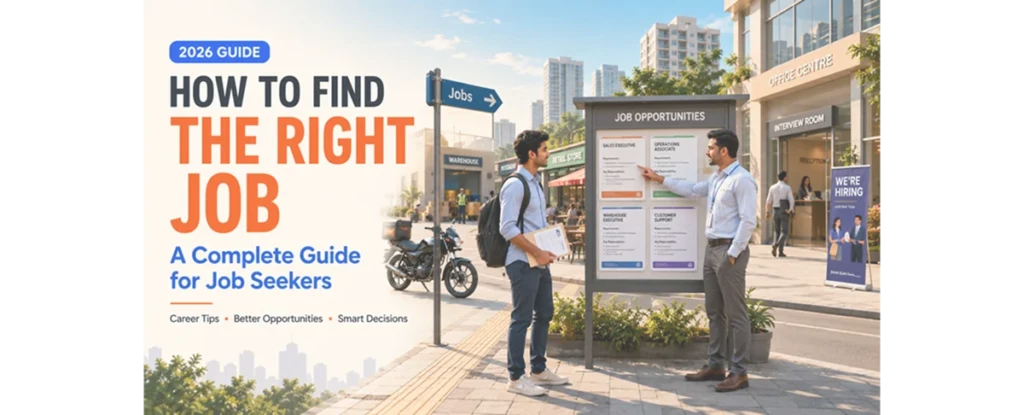
Finding the right job is about more than simply applying to as many vacancies as possible. The right opportunity should match your skills, career goals, interests, and long-term growth plans. With thousands of job openings available every day across industries like logistics, retail, IT, healthcare, manufacturing, and customer service, job seekers have more choices than ever before.
However, increased opportunities also mean increased competition. Employers receive hundreds of applications for a single position, making it important to stand out from other candidates.
Whether you’re a fresher, an experienced professional, or someone planning a career change, this guide will help you find the right job more effectively.
Understand Your Skills and Career Goals
Before applying for jobs, take some time to understand what you want from your career.
Ask yourself questions like:
- What type of work do I enjoy?
- Which skills do I already have?
- What industries interest me?
- Do I prefer office work, field work, or remote work?
- Am I looking for full-time or part-time employment?
Knowing your strengths helps you target suitable opportunities instead of applying randomly.
Create a Professional Resume
Your resume creates the first impression.
A good resume should include:
- Contact information
- Career objective
- Educational qualifications
- Work experience
- Technical skills
- Soft skills
- Certifications
- Languages known
Keep your resume clear, well-structured, and limited to one or two pages.
Update it regularly whenever you gain new experience or skills.
Search Jobs on Trusted Platforms
Use reliable sources while searching for vacancies.
Popular options include:
- Company career pages
- Professional networking platforms
- Recruitment agencies
- Campus placement drives
- Job fairs
- Employee referrals
Avoid applying through unknown websites that request registration fees or personal financial information.
Customize Every Job Application
Many applicants send the same resume for every vacancy.
Instead:
- Read the job description carefully.
- Highlight relevant skills.
- Update your career objective.
- Mention experience related to the role.
Customized applications have a better chance of getting shortlisted.
Improve Your Skills
Employers prefer candidates who continue learning.
Consider improving skills such as:
- Communication
- Computer basics
- Microsoft Office
- Digital tools
- Customer service
- Time management
- English speaking
- Industry-specific technical skills
Even short online courses can strengthen your profile.
Build Your Professional Network
Networking helps you discover opportunities that may never be publicly advertised.
Ways to expand your network include:
- Connecting with professionals
- Attending career fairs
- Participating in industry events
- Joining professional groups
- Staying active on professional networking platforms
Many companies hire through employee referrals.
Prepare for Interviews
Interview preparation is just as important as your resume.
Practice answering common questions such as:
- Tell me about yourself.
- Why do you want this job?
- What are your strengths?
- What challenges have you handled?
- Where do you see yourself in five years?
Research the company before attending the interview.
Develop Soft Skills
Technical knowledge alone is not enough.
Employers also value:
- Teamwork
- Leadership
- Problem-solving
- Adaptability
- Positive attitude
- Professional behaviour
Strong soft skills often influence hiring decisions.
Be Careful of Job Scams
Unfortunately, fake job offers are becoming more common.
Watch for warning signs such as:
- Requests for payment
- Guaranteed jobs without interviews
- Poorly written emails
- Fake company websites
- Unrealistic salary promises
Legitimate employers generally do not charge candidates to apply for jobs.
Consider Growing Industries
If you’re unsure which field to choose, focus on industries with strong hiring demand.
These include:
- Logistics
- Delivery Services
- Warehousing
- E-commerce
- Healthcare
- Manufacturing
- Retail
- Customer Support
- Information Technology
- Renewable Energy
Growing industries often provide better long-term career opportunities.
Stay Consistent
Finding the right job takes patience.
Create a daily routine:
- Apply for relevant jobs.
- Update your resume regularly.
- Learn new skills.
- Follow up professionally.
- Prepare for interviews.
Consistency increases your chances of success.
Frequently Asked Questions
How many jobs should I apply for daily?
Focus on quality rather than quantity. Apply only for positions that match your skills and career goals.
Should freshers apply even without experience?
Yes. Many companies actively recruit freshers and provide training after hiring.
Is networking really important?
Yes. Referrals and professional connections often help candidates learn about opportunities earlier.
How often should I update my resume?
Update your resume whenever you gain new experience, certifications, or skills.
Which industries are hiring the most?
Logistics, warehousing, delivery services, healthcare, retail, manufacturing, and technology continue to offer strong employment opportunities.
Conclusion
Finding the right job requires planning, preparation, and persistence. By understanding your strengths, creating a professional resume, improving your skills, and applying strategically, you can significantly improve your chances of getting hired.
Remember that every application and interview is an opportunity to learn. Stay consistent, continue developing your skills, and focus on roles that align with your career goals. With the right approach, you can build a successful and rewarding career in today’s competitive job market.
Find top jobs near you at Alphareach